


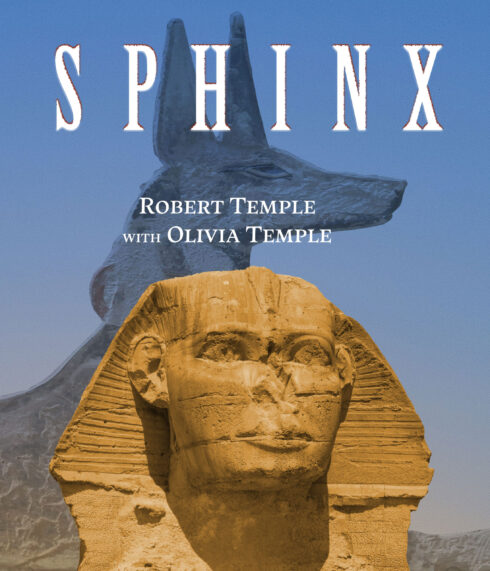


Sphinx

What was the Sphinx for, and what is the Sphinx?
The Sphinx’s body is not a lion, but another creature.
The head was re-carved, and the Pharaoh’s face can now be identified.
There is a burial chamber inserted beneath the waist of the Sphinx. 280 years’ worth of published accounts of eye witnesses who saw the chamber, all of them published here in full, prove its existence. It was sealed with cement in 1926.
The story of the Middle Kingdom pharaoh who uncovered the Sphinx was still being told by the locals in 1482, as recorded by a Dutch visitor. This is the longest recorded survival of folklore in world history, a tale which survived with its essential facts intact for three thousand years.
The Nile in ancient times lapped near the feet of the Sphinx, and the Sphinx was like an island surrounded by water filling ‘the Sphinx Pit’ where it sits now. The photographic evidence of sluices for controlling the inflow of the water are published. The water erosion is fully explained.
Evidence published here proves that the Sphinx is part of a unified design with the three main pyramids of Giza. It was ‘the guardian’ of Giza. The three pyramids and the Sphinx were all conceived as a single complex.
The Sphinx was originally a crouching figure of the dog god Anubis, traditionally the guardian of the dead in ancient Egypt.
Every published account of the Sphinx from Roman times to 1837 is published in the back of the book, most translated from foreign languages. These were collected over many years and are now gathered into one place.
The Sphinx was part of a sacred resurrection cult based upon the rising sun at the equinox.